Complexity in Cube Design
One of the current bees in my bonnet is very much card complexity as it relates to the cube experience. Now to start things off on the right foot, I do have complex cubes, there is merit to just playing "the best version of X effect, complexity be damned", I won't deny that. As time goes on I feel more and more like this idea is not one I can abide by personally for cubes I maintain just for my own enjoyment (Pauper Cube folks need not fear). Just to pick an example we now have cards that care about prime numbers. We used to only see cards that might need an internet connection in Un-sets, but this is the new face of complexity acceptable in black-bordered sets. Let's talk about some types of complexity and maybe figure out where you fall on each topic.
Card per Card
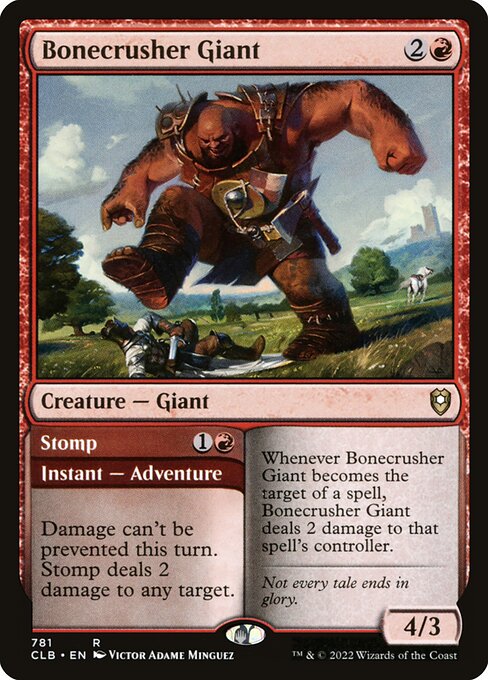
I started referring around the time of Zendikar Rising and the rise of the Modal Double Faced Card to how much "card per card" things were. At a base level, if it fits on one side of the card with plain text sizing, maybe even has room for reminder or flavor text, that's at most 1 card on that physical card.
The gods in Kaldheim are my best example for 2 cards per card. There's fully a second card on the back side that in no way directly depends on the front face other than being physically attached.
Transform cards are sometimes a card and change, sometimes much more. Delver could probably be a single face with some creative layout, but not fully 1 card worth of card.
Split cards are also a bit more than 1 card but definitely aren't a full 2 card just due to space limitations and the fact that either half generally hasn't been a full spell, but some are definitely in the 2 card space, especially the fuse ones..
Adventures are however 2 cards, despite the limited space, the fact that without doing stuff other than playing the card it will likely have 2 effects that are totally removed from one another, and they also secretly have the words "draw a card" in there.
Flashback feels like 1 card but is probably a bit more. Older designs are closer to 1, but now with things like. Checking how much mana you sent on them allows for 2 close but different cards.
My personal favorite has gotta be taking the initiative, which fully introduces a game state, 2 tokens to track it and BRANCHING DECISION PATHS. Jailable amount of cards per card (it's about 6 cards, if you count the base creature and the 6 paths through the undercity).
Sagas are almost always more than a card and sometimes (see the flip NEO ones) are a frankly upsetting amount of card per card.
Where do I fall? I think I'm good keeping dfcs at arms length for personal projects for the time being. Physical issues aside they're just more text than should fit on a card. I'm also removing persistent game states like The Initiative, The Monarch and Start Your Engines from new projects headed forwards. I'm not even sure how many sagas I'm interested in playing personally, but I'll have to see.
Keyword bloat
Oh man, this one sneaks up on us all. It's not helped by the fact most of these new keywords are either kicker or flashback BUT WITH ONE LITTLE TWIST. There are some of these that I think work really well, escape for example I adore as a nice fusion of buyback (a bad mechanic for one player and a ton of fun for the other) and flashback (a genuinely flawless mechanic) to create something new and really fun. The issue is that then you have one card with disturb slip in, one dice rolling card, it keeps going until there's fully 30 years of keyword soup.
How am I gonna combat the bloat? Well hell, I'm not sure I can, but I can at least layout my idea of mechanic types I have less interest in including, starting with game states. As previously mentioned, minigames are not for me, and I think where possible I'm going to try and be more cautious about one off instances of mechanics in my design. I think this also ties into my next area well...
Doohickey Proliferation
 Jail
Jail
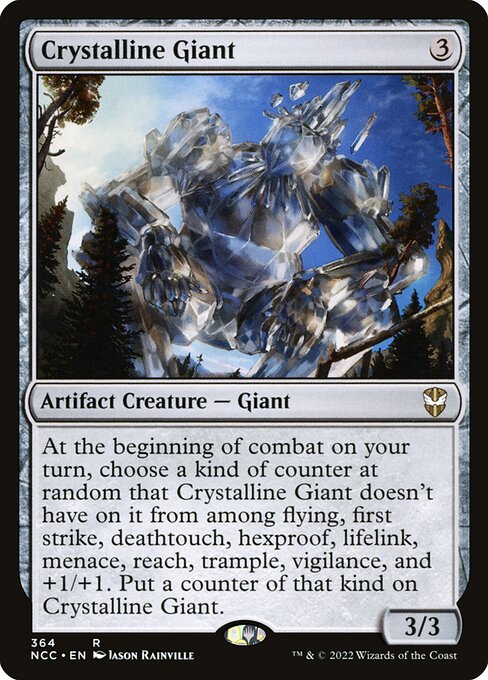
So I don't know exactly how to define a doohickey, but it's "anything that isn't a card", so tokens, counters, dungeons, all that nonsense, even dice and coins while we're at it. In recent years while I understand the design space that is opened up with ability counters, but crystalline giant alone is a complexity nightmare worthy of the game design gulags. I would be happy to never need to track abilities via counters ever again personally.
There's also just so many new weird creature tokens. Is this the pilot token that crews at +2 power or the one that crews AND saddles at +2? Where are the zombie tokens, I need, wait, this says zombie druid?
My personal solution is that if there's a good reason to introduce one of these weirdo doodads then fine, I won't be a curmudgeon, but all those neat cards with renew placing counters on stuff? I'm set, I'll stick with boring +1/+1 counters, maybe -1/-1 if I'm feeling spicy.
Where does this leave me?
I'm currently messing around and really attracted to the idea of the bar cube as described by many creators, No token, No Counters, even no shuffling, and while I think it's extreme there's something to be gleaned from it.
I'm also working on some stuff for my pet project of the sticker cube that has been a pain in terms of reducing complexity where I can in an effort to create a fun but exceedingly simple play environment.
I will likely eventually swing back a bit and start reintroducing complexity, but I have no idea when/if that'll happen and I'm content to live in the land of simple, elegant design for the foreseeable future.
So what's the whole point?
I think as we enter the age of every increasing magic complexity, there is an onus on cube curators to be conscious of the amount of reading you're asking someone to partake in as well as off the wall mechanics you decide to include. These can all be tuned to your exact liking but just take a moment, especially on the boring minor upgrades, is the value these new cards bring to the cube and the game play experience worth the complexity they bring along with them?
Thanks for reading!